In a scene from the movie Good Will Hunting, Will (Matt Damon) meets Sean (Robin Williams) for therapy. At one point Will looks at the books on the shelves and says (PG version), “You people baffle me, spend all your money on all these fancy books that you surround yourselves with them, but they are the wrong books.” Sean then asks, “What are the right books Will?” Will says, “whatever blows your hair back.”
The answer may not be great, but the question is important, “What are the right kind of books?”
Here are five principles I have found useful when selecting good books:
Choose the classics. These are the books that have stood the test of time. Thoreau said, “Read not the times; read the eternities.”
It should be readable and re-readable. Not only should they be understandable, but when you return to them you find something new and worthwhile each time.
It should inspire us to noble ideals and pure emotions. Our minds are like the soil and what we read the seed.
Gives us food for thought.
Adds to our storehouse of useful knowledge. Benjamin Franklin said, “an investment in knowledge always pays the best interest.” If a good book gives even one new idea which makes life better, that is priceless.
St. Augustine once heard, “Tolle Lege” (Latin: Take up and read), and it changed his life forever. Reading the best books can do the same for us today.
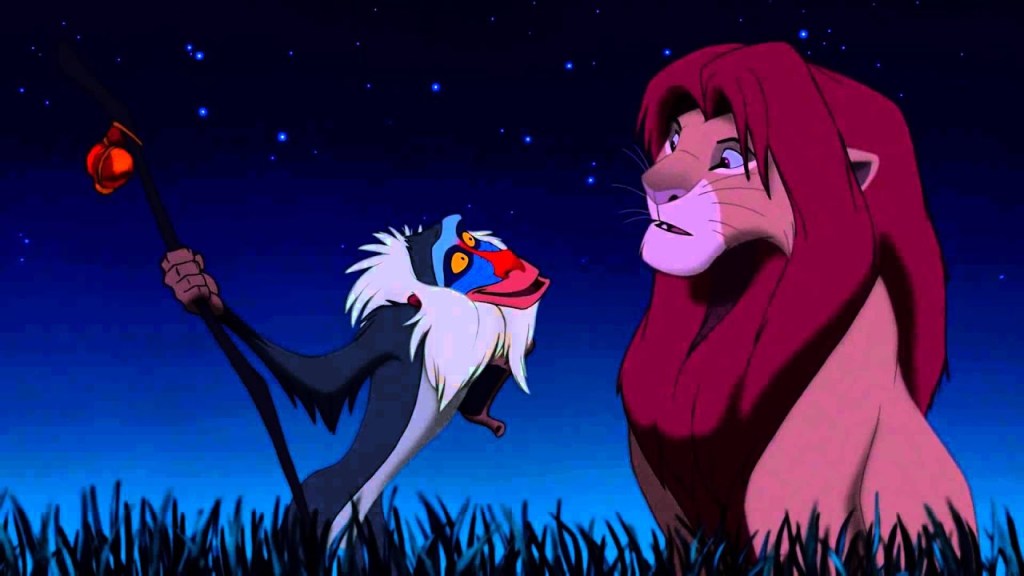
There is a scene in the Lion King that happens right before Simba returns to the Pride Lands to face his past. Simba tells Rafiki “the winds are changing” and Rafiki responds “change is good”. Simba sighs and says, “yeah but it’s not easy”.
I found this conversation interesting and will look closer at each of these quotes to explore the idea of change.
The Winds are Changing
There’s a line in a David Bowie song that says, “time may change me, but I can’t change time”.
In the book, “Calculus for Everyone”, author Mitch Stokes explains the history of Calculus which is the mathematics of change and motion. The ancient Greeks would interchange the words “motion” and “change” and one of the biggest philosophical issues they wrestled with was called the Problem of Change. The most important question was, “why do things change”? A simple but profound question that can easily be taken for granted.
Change is evident because change and motion are constantly happening around us. And in a sense, everything “moves” through time so that even things that seem stationary are changing, even rocks are getting older. “You can never step into the same river twice” was a quote from Heraclitus.
But not all Greeks at the time believed change and motion were real. Parmenides said nothing changes. He had a student named Zeno who created the famous “Zeno’s Paradox” which said it would take eternity to move any distance for example 1-mile because you could divide the distances by half indefinitely and never get to the end, but this turned out to not be true and based on faulty assumptions and interestingly can be solved with Calculus.
Pythagoras (from the Pythagorean theorem) and Plato (one if not the most important philosophers of all time) both believed the world was designed mathematically. Plato believed the universe could be described mathematically and that this would help resolve the problem of change. This didn’t happen in his lifetime but later became a reality during the Scientific Revolution at the time of Newton.
Isaac Newton and Gottfried Leibniz independently developed Calculus (Newton discovered it first and Leibniz was the first to publish and make it more user friendly), which is the language of Physics and became one of the ways to help resolve the Problem the Change. It is interesting that the Greek word physis (which physics comes from) and the equivalent Latin word natura (which nature comes from) are references not only to the world of changing things in motion but also to the ultimate source of change which Aristotle and later Aquinas would write of a prime mover.
With all this said, the problem of change was at the foundation of the some of the greatest discoveries in human history! With Calculus we have a better understanding of our ever-changing world.
We live in a world of constant change, and we can always expect time to change us although we can’t change time. Change is inevitable and “in the wind” indeed.
Change is good – but it’s not easy
I heard it said that change is both loved and hated, sought, and avoided. This has been evident in my own experiences and why generally there can be so much tension with this topic.
On the first episode of the TV show Frasier, a man named Russel calls into Frasier’s radio show, and he feels his life is in a rut. To try and help the man, Frasier starts to explain why he came back to Seattle. After mentioning things weren’t going well for him in Boston he said “I packed up my things and moved back to my hometown of Seattle. I took action Russel, and you can too, move, change, do something. If it’s a mistake do something else.”
There was a recent podcast I listened to where Jordan Peterson mentioned two things were required for psychotherapy to be successful. First was a realization that something was wrong in your life and that it was making you unhappy. Second was a willingness to make a change. For this to happen requires an accurate view of reality and to also possess an attitude of humility.
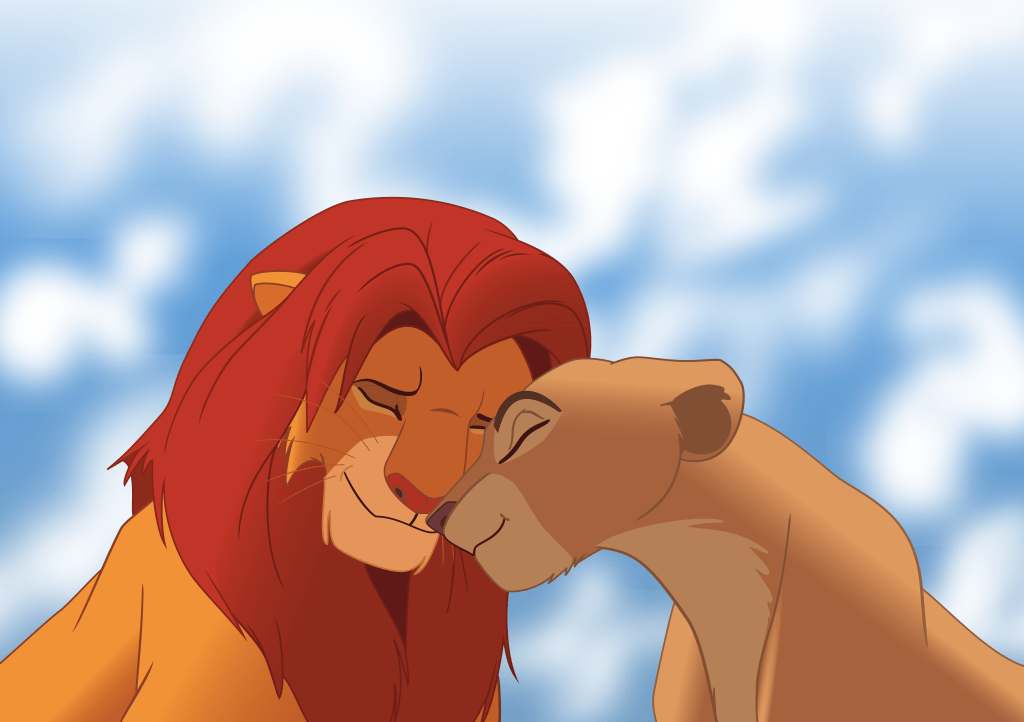
After his father Mufasa died Simba began hanging out with Timon and Pumba for many years and adopted a philosophy of “hakuna matata” (no worries). He then runs into Nala his childhood friend and as they spend time together, they fall in love. Nala encourages Simba to return to the Pride Lands because things were bad with his Uncle Scar in charge. Throughout this interaction Simba gets a clearer view of reality, and you can see by his words and actions that he is humbled and desires a change. He then goes back to the Pride Lands and even though conflict and fighting occurred, he was able to take his rightful place as king. It’s a beautiful story that taps into the power of positive change.
Change is good although a lot depends on our attitude. Change is hard, the bigger the change usually the more difficult. Through the process of change we grow and become better and stronger. Personally, I am resistant to change in my life but when I look back, I am grateful for those times that challenged me.
The Lion King also demonstrates that it is good to have people in our lives who are willing to speak truth to give us a better picture of reality and encourage us toward a better life.
It takes courage to change but it usually ends up for the good. And like Frasier said, “make a change and if it’s wrong try something else”.

 Ancora Imparo
Leave a comment